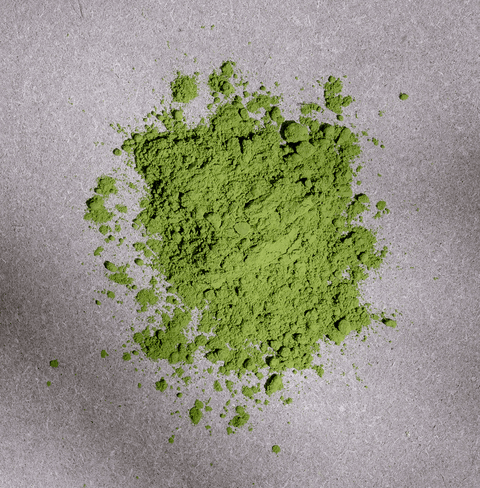
Matcha is powdered green tea. You whisk the powder straight into hot water or milk and drink the whole leaf, rather than steeping leaves and throwing them away like normal tea. That one difference is why it looks so green, tastes so concentrated, and gives the steady lift people talk about.
If you have been served a bright green latte and wondered what it actually is, here is the plain version: what matcha is made of, how it differs from the green tea you already know, what it tastes like, and how to drink it.
What is matcha made of?
Matcha is made from green tea leaves (Camellia sinensis), the same plant as every other true tea. What makes it matcha is how those leaves are grown and processed:
- The plants are shaded for two to four weeks before harvest. Less sun pushes the leaves to make more chlorophyll and more L-theanine, which is where the deep green colour and the savoury, sweet taste come from.
- Only the youngest leaves are picked. The stems and veins are removed, and what is left is called tencha.
- The tencha is stone-ground into an ultra-fine powder. Good matcha feels like talcum powder, not sand.
So a tin of matcha is simply whole green tea leaves, shade-grown and ground to powder. Nothing is added. For more on where the best leaves come from, see our guide to where the best matcha is grown.

Is matcha the same as green tea?
It comes from the same plant, but you drink it differently, and that changes everything. With regular green tea you steep the leaves and pour off the liquid, so you only get what dissolves into the water. With matcha you whisk the whole leaf into the drink and consume all of it. That is why matcha is more concentrated in flavour, colour, caffeine and antioxidants than a cup of steeped green tea. If you want the full comparison, we cover it in matcha vs green tea.
What does matcha taste like?
Good matcha is savoury and smooth with a natural sweetness and a grassy, fresh note. The savoury quality is umami, the same taste you get in broth or parmesan, and it is a sign of quality rather than a flaw. Lower-grade or old matcha tastes flat, dusty or harshly bitter. A vivid green colour and a silky texture are the quickest signals that it is fresh and well made.
Does matcha have caffeine?
Yes. Because you drink the whole leaf, matcha carries a meaningful amount of caffeine, usually somewhere between a cup of green tea and a shot of espresso. The difference is the L-theanine alongside it, which tends to make the caffeine feel smoother and steadier than coffee. We break down the numbers in how much caffeine is in matcha.
Ceremonial or culinary: which matcha should you buy?
There are two broad grades, and the right one depends on how you drink it. Ceremonial grade is made from the youngest leaves and is smooth enough to drink with just water. Culinary grade is bolder and slightly more bitter, which is what you want in a latte or in baking where it has to cut through milk and sugar. If you mostly make lattes, culinary is the smart buy. If you drink it neat, go ceremonial. The full breakdown is in our ceremonial vs culinary grade matcha guide.
How do you make matcha?
The basic method is quick. Sift about one to two grams of matcha into a bowl, add a little hot water (around 80 degrees Celsius, not boiling), and whisk in a brisk zig-zag until it is smooth and frothy. From there you can drink it as is, or top it with hot or cold milk for a latte. A bamboo whisk makes it easier to get lump-free, but a small electric frother also works. For the full cafe-style method, follow our matcha latte recipe, and if you are setting up at home you will want a few basic matcha accessories.
Where to buy matcha in the UAE
PERCUP stocks ceremonial and culinary matcha from Japanese and specialty producers, with delivery across the UAE. Browse the full matcha marketplace to compare grades and brands, and start with a small tin if it is your first.
Frequently asked questions
What is matcha?
Matcha is finely ground green tea made from shade-grown leaves. You whisk the powder into water or milk and drink the whole leaf, which makes it more concentrated than steeped green tea.
What is matcha made of?
Just green tea leaves. The plants are shaded before harvest, the youngest leaves are picked and de-stemmed to make tencha, and the tencha is stone-ground into powder. Nothing else is added to pure matcha.
Is matcha just green tea?
It is the same plant, but you consume the whole leaf as powder instead of steeping and discarding it. That is why matcha is stronger in flavour, colour, caffeine and antioxidants than a regular cup of green tea.
Does matcha have caffeine?
Yes, usually between a cup of green tea and a shot of espresso. The L-theanine in matcha tends to make that caffeine feel smoother and more sustained than coffee.
How do you make matcha at home?
Sift one to two grams into a bowl, add hot water at about 80 degrees Celsius, and whisk briskly until smooth and frothy. Drink it as is, or add milk for a latte.