What is Hojicha? The Japanese Roasted Tea Taking Dubai by Storm
If you've been paying attention to café menus in Dubai over the last year or so, you may have noticed something new creeping in alongside the flat whites and matcha lattes. A warm, reddish-brown drink. A slightly smoky aroma. Something that feels deeply Japanese but is somehow hard to place. That's hojicha — and while it's been a staple in Japan for nearly a century, it's only now finding its footing in the UAE. At PERCUP, the world's first caffeine-focused marketplace operating out of Dubai, we've been watching hojicha's rise firsthand. Here's everything you need to know.
Why Hojicha is Different from Every Other Green Tea
Most green teas — sencha, gyokuro, matcha — are defined by their freshness. Hojicha takes a completely different route. The leaves are roasted over charcoal, which strips away the grassy, vegetal character you'd expect and replaces it with something warm, toasty, and faintly caramel-like. It's this roasting process that also dramatically reduces the caffeine content, making hojicha one of the few teas you can drink in the evening without any consequence.
1. What Exactly is Hojicha?
- Origin: First developed in Kyoto, Japan, in the 1920s — originally as a way to use lower-grade stems and stalks that would otherwise go to waste.
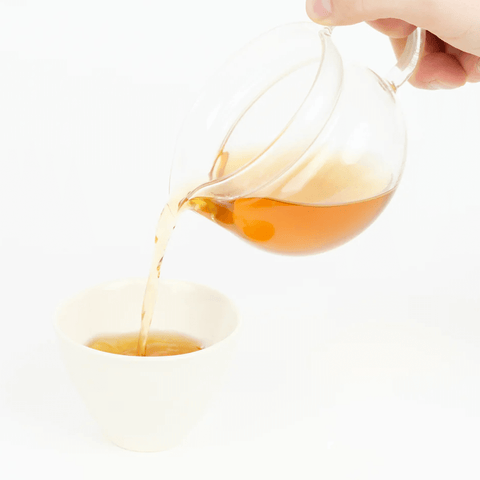
- Colour: Deep reddish-brown, both as dry leaves and when brewed.
- Flavour Profile: Warm, roasted, and slightly sweet — reminiscent of toasted barley or mild coffee, with none of the bitterness typical of green teas.
- Caffeine: Very low (approximately 7–8mg per cup, compared to 35–70mg for matcha). Safe to drink in the evening, and commonly served to children and the elderly in Japan.
- Pro Tip: If someone in your household finds matcha too intense or coffee too jittery, hojicha is almost always the answer. It's the most approachable caffeine category we carry. Shop Hojicha on PERCUP
- Forms available: Loose leaf (for traditional brewing) and powder (for lattes, baking, and cold drinks).

2. Hojicha vs Matcha: What's the Difference?
- Colour: Hojicha is reddish-brown; matcha is vivid green. Easy to tell apart at a glance.
- Flavour: Matcha is umami-rich, grassy, and slightly bitter. Hojicha is roasted, warm, and gently sweet — a completely different drinking experience.
- Caffeine: Matcha hits like espresso (35–70mg). Hojicha is as gentle as a mild herbal tea (7–8mg).
- Best moment: Matcha is your morning focus drink. Hojicha is your 4pm wind-down, your evening cup, your after-dinner tea.
- Pro Tip: Think of hojicha as matcha's quieter, more contemplative sibling. Equally interesting, far less demanding. Many of our customers in the UAE use both — matcha in the morning, hojicha in the evening. Explore our Matcha collection
- Common ground: Both come from the same plant (Camellia sinensis), both originated in Japan, and both work beautifully as lattes.
3. Why is Hojicha Getting Popular in Dubai?
- Matcha opened the door: Dubai residents have spent the last couple of years discovering the world of Japanese tea — the rituals, the wellness angle, the flavour complexity. Hojicha is the natural next step for anyone ready to explore further.
- The caffeine conversation is shifting: More people here are actively managing their caffeine intake — when they consume it, how much, and how it affects their sleep. Hojicha fits that conversation perfectly.
- It pairs beautifully with UAE palates: The roasted, slightly caramel flavour works wonderfully with dates, baked goods, and milk. It makes an exceptional latte — which matters a lot in a market that takes its café culture seriously.
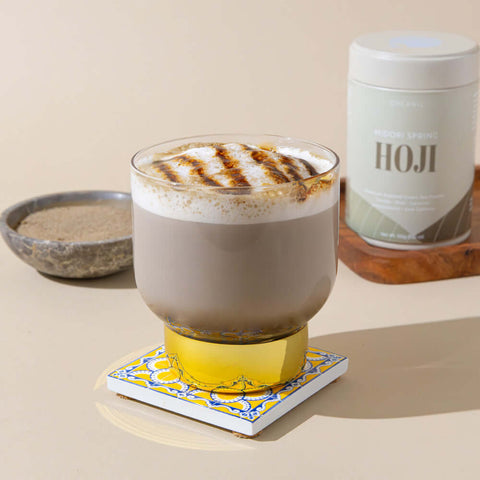
- Pro Tip: Hojicha oat milk latte with a dash of honey is one of the most popular combinations we see among UAE customers. Try it once and it tends to stick. Try Hojicha at PERCUP
- Growing availability: A year ago, quality hojicha was nearly impossible to find in the UAE. That's changed — and PERCUP is one of the reasons why.

4. How to Brew Hojicha at Home
- Water temperature: 90–95°C. Unlike matcha, which needs cooler water, hojicha can handle high heat without turning bitter.
- Steep time: 30–45 seconds for loose leaf. Short steeps only — longer than a minute and bitterness creeps in.
- Coffee-to-water ratio: 1 teaspoon (2–3g) per 200ml of water for loose leaf.
- For a latte: Whisk 1 teaspoon of hojicha powder with 30ml of hot water to form a concentrate, then top with 150–200ml of steamed milk. Oat milk is our recommendation.
- For iced hojicha: Brew extra strong (double the usual powder), then pour directly over ice. The roasted flavour holds up beautifully cold — one of the best summer alternatives to iced coffee in the UAE heat. Shop Hojicha Powder
- In the kitchen: Hojicha powder can be mixed into yoghurt, porridge, cakes, and cookies — exactly like matcha, but with a warm brown colour and a toasty flavour instead of green and grassy.
5. What to Look For When Buying Hojicha in the UAE
- Origin: Look for Japanese hojicha — specifically from Kyoto's Uji region, Kagoshima, or Shizuoka. These are the benchmark regions with the strongest roasting traditions.
- Leaf vs powder: Loose leaf gives you more control over flavour when brewing traditionally. Powder is more versatile — ideal for lattes, cold drinks, and baking. If you're new to hojicha, start with the powder.
- Aroma: Good hojicha should smell like roasted grain or very mild coffee when you open the packet. Flat, musty, or faintly sour means it's past its best.
- Colour: The leaves or powder should be a consistent, even reddish-brown. Green patches mean uneven roasting; too dark means it's been over-roasted and will taste bitter.
- Pro Tip: All hojicha products on PERCUP are sourced from verified Japanese brand partners with full provenance detail — so you always know where it came from and how it was produced. Explore PERCUP's Hojicha Range
- Storage: Keep hojicha in an airtight container away from light and moisture. Unlike matcha, it doesn't need refrigeration — but it does lose its roasted aroma if left exposed to air.
Hojicha Quick Reference: Brewing Cheat Sheet
- Traditional brew: 2–3g loose leaf · 200ml water at 90–95°C · steep 30–45 seconds.
- Hojicha latte: 1 tsp powder · 30ml hot water (concentrate) · 150–200ml steamed milk.
- Iced hojicha: 2 tsp powder · 60ml hot water · pour over 200ml ice.
- Caffeine per cup: 7–8mg (vs 35–70mg for matcha, 80–100mg for a shot of espresso).

How to Serve and Enjoy Hojicha
- Serve hot in a small ceramic cup for the traditional Japanese experience — no milk, no sugar needed.
- Steam milk to 60–65°C for a latte — slightly lower than you would for a matcha latte, as hojicha's flavour is more delicate at higher temperatures.
- Pair with dates, shortbread, or anything with caramel or chocolate notes — they complement the roasted flavour naturally.
Making Hojicha Part of Your Daily Ritual
Hojicha is one of those ingredients that tends to create loyal drinkers quickly. The first time you taste a properly made hojicha latte — warm, slightly smoky, genuinely comforting — it tends to stick. It fills a gap in the caffeine landscape that nothing else quite covers: ceremonial enough to feel special, low-key enough to drink every day.
Dubai's specialty beverage scene has grown significantly in the last few years, and hojicha is the next chapter in that story. We expect it to follow exactly the same trajectory that matcha did — from curiosity to staple — and probably faster, given that the groundwork has already been laid.
Discover the full hojicha range on PERCUP.
We connect you to the world's best coffee, tea and matcha brands because we believe that everyone deserves to have better, more exciting drinking experiences.